
Laundry costs add up fast when you choose the wrong washing machine model or buy from the wrong place.
Use this guide to pick the right type, size, features, and retailer, then install, maintain, and retire it smartly worldwide.
Which Washing Machine Type Fits Your Budget
Stuck choosing among similar machines? Clarity saves money; therefore, the side-by-side guide below maps trade-offs so you avoid overpaying.
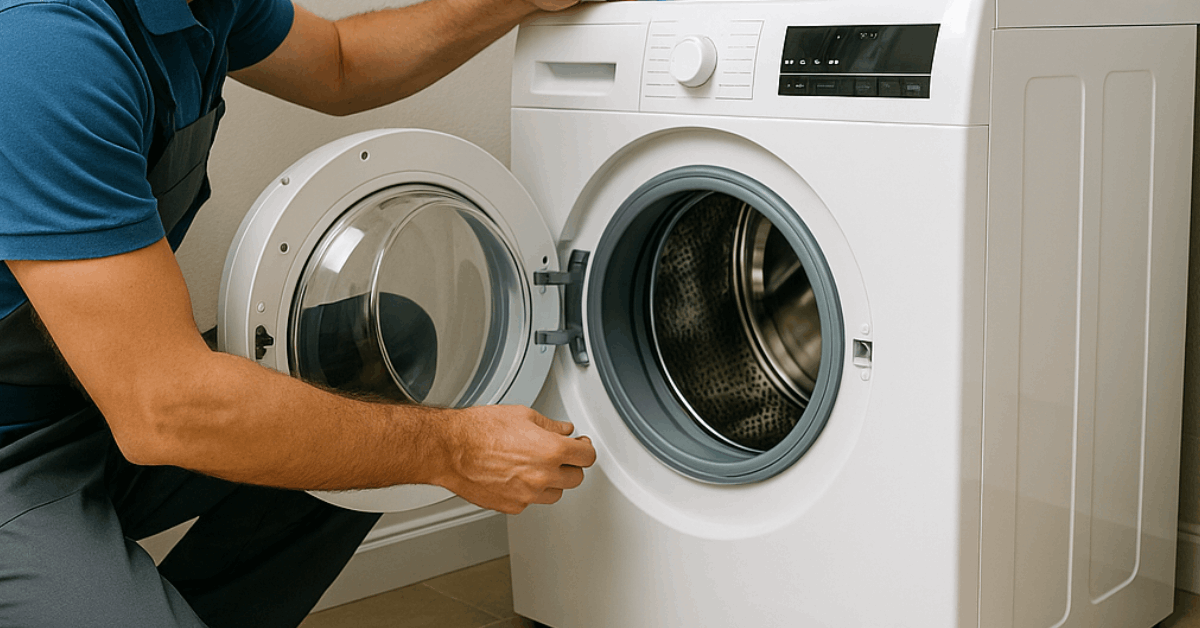
A quick overview helps you match space, habits, and price tier before you start hunting for deals.
| Type | Best for | Strengths | Trade-offs | Space & Install | Typical Price Tier |
| Front-load | Larger loads, tight spaces (stackable) | Uses less water; gentle on fabrics; high spin shortens drying | Longer cycles; door gasket needs care to avoid odors | Needs front clearance; ideal for stacking with compatible dryer | Mid to premium |
| Top-load agitator | Lowest upfront cost | Shorter cycles; simple controls | Rougher on fabrics; higher water use | Taller lid clearance; not stackable | Budget to mid |
| High-efficiency top-load (impeller) | Good cleaning without front-load | Better water use than agitator; larger drums | Can tangle clothes; longer cycles than agitator | Similar footprint to agitator | Mid |
| Compact front-load | Apartments, tiny homes | Efficient; gentle; fits narrow doors | Smaller capacity; may vibrate | Often stackable; 24-inch class | Mid to premium |
| Washer-dryer combo (all-in-one) | One box, minimal space | Wash + dry without moving laundry | Drying takes long; smaller dry loads than wash | No vent required on many models | Mid to premium |
| Portable | Occasional or light loads | Light, stowable; low power and water | Limited capacity and features | Uses sink/standpipe; easy hookup | Budget |
Capacity and Space Fit
Too small wastes time; too big wastes money, which means a quick sizing check prevents daily frustration and higher utility costs.
Pick capacity for your typical week, not your worst week, and verify the machine actually fits through doors and in the alcove.
- Household sizing (drum rated in kg):
• 1–2 people: 7–8 kg
• 3–4 people: 9–10 kg
• 5+ people or bulky bedding: 11–14 kg
Rough rule: about 1 kg ≈ of five T-shirts; king comforters need ≥4.5 cu ft in regions listing cubic feet. - Measure accurately: Note the width, depth, and height of the space, plus doorways and turns. Leave ~10 cm behind for hoses and ~2 cm per side for airflow.
- Noise and Vibration: If the laundry area is located near bedrooms or living spaces, prioritize models rated very good for noise and vibration reduction.
Features That Lower Total Cost
Prioritize value over gimmicks; as a result, your running costs drop while performance stays consistent.
Focus on the handful of options that improve cleaning, time, and efficiency rather than flashy extras.
- Energy and water efficiency: Look for trusted eco labels (e.g., ENERGY STAR or regional equivalents) and eco cycles that keep water use near ~10 gallons/38 liters per load on efficient models.
- Inverter motor: Adjusts drum speed according to load size, reducing energy consumption and noise while enhancing longevity.
- High spin speed: Better water extraction shortens dryer time and lowers electricity bills.
- Auto-dose dispensers: Prevent detergent overuse and improve rinse results.
- Hot water/steam options: Help with stains and allergens; expect higher energy draw when used.
- Stainless steel drum: Resists wear, allows higher spin speeds, and is easier to clean.
- Smart app control (optional): Remote start, cycle downloads, usage alerts, and basic diagnostics can save time.
Where to Buy Cheap—Safely
Chasing a low sticker price? Hidden fees can ruin deals, which is why the checklist below helps keep purchases safe and affordable worldwide.
Compare channels side-by-side so you get price, protection, and delivery without unpleasant surprises.
| Channel | Why It’s Cheap | What to Verify | Pro Tips |
| Authorized online retailers | Frequent promos, coupon codes, bundle deals | Full manufacturer warranty; clear return window; delivery and haul-away fees | Ask for price match; watch seasonal sale periods and flash deals. |
| Local appliance stores | Negotiable pricing; floor-model discounts | In-house service; installation quality; parts availability | Request open-box or demo units with full warranty. |
| Warehouse clubs | Member pricing; package savings | Delivery schedule; extended warranty terms | Time purchases to rotating appliance events. |
| Manufacturer direct | Loyalty discounts; latest models | Stock levels; delivery coverage | Check clearance sections for prior-year models. |
| Certified refurbished | Lower cost for like-new units | Official refurbishment, warranty, and safety certification by national standards bodies | Prefer units with 1-year replacement or repair guarantees. |
| Marketplaces | Many sellers competing | Seller ratings; warranty honored by brand; return logistics | Filter for authorized sellers only; avoid too-good-to-be-true listings. |
Essential paperwork: Ensure receipts show model numbers and serials; confirm installation and haul-away in writing; verify compliance with your country’s electrical and safety standards.
Washer-Dryer Combos: Decide Quickly
Space is tight for many households; in turn, a combo can be smart if you accept trade-offs.
Choose this route if convenience beats throughput; pick separates for speed and capacity.
Pros:
- Free floor area compared with two machines.
- Wash performance comparable to standalone units in many cases.
- Single appliance to buy, install, and maintain.
- Ventless drying options suit apartments without exterior vents.
Cons:
- Dry cycles are long; an effective dry load is often ~half the wash load.
- Higher water use on some condenser-dry models.
- More complex controls; higher repair costs.
- Dimensions can be tricky for older closets; confirm clearances carefully.
Simple rule: Small households benefit; larger families should favor a separate washer and dryer or a stackable pair for parallel wash/dry.
Installation Essentials
Install once, install right, therefore you avoid leaks, vibration, and early failures.
A careful setup extends lifespan and prevents nuisance service calls.
- Choose a stable, level location with nearby power, water supply, and a standpipe or sink drain.
- Confirm fit end-to-end, measuring doorways, hall turns, and final alcove; compare to the machine’s published dimensions.
- Level the feet front to back and side to side; recheck after the first load.
- Attach supply hoses hand-tight, then snug with a quarter-turn; use new hoses and include inline screens if your water has sediment.
- Secure the drain hose to a standpipe or sink to prevent backflow or dislodging.
- Remove shipping bolts on front-loaders to avoid severe vibration.
- Run a test cycle while watching for leaks, vibration, and error codes.
- Consider professional installation if you are unsure about leveling, electrical load, or stacking hardware.
Safe Use Precautions
Small mistakes can shorten your lifespan and compromise safety, which means adopting a few habits can protect your home and appliances.
- Treat the washer like an electrical and plumbing appliance, not just a laundry bin.
- Verify the outlet is properly grounded and the cord is undamaged.
- Close water taps and unplug during extended idle periods or moves.
- Keep the plug clean and dry; never yank by the cord.
- Avoid spraying the exterior with water; wipe with a damp cloth only.
- Keep hands and objects out of a spinning drum; supervise children nearby.
- Keep away from direct sunlight and high heat sources.
- Do not exceed ~50 °C inlet temperature unless your manual allows it.
- Leave the door ajar after use on front-loaders to reduce moisture buildup.
Cleaning and Routine Maintenance
Odors and residue creep up over months; as a result, simple monthly care keeps the wash fresh and efficient.
A short checklist prevents mildew, soap scum, and performance loss.
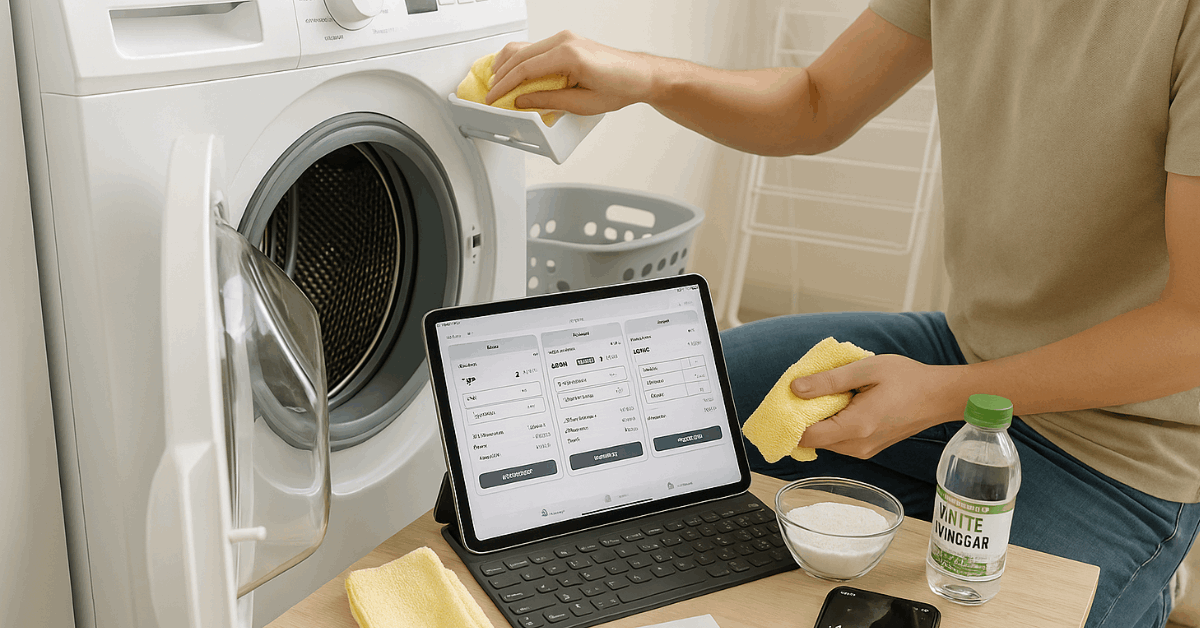
- Monthly maintenance wash: Run a hot cycle empty using white vinegar first; pause soak for about an hour if available.
- Second pass: Run another hot cycle with baking soda to neutralize odors.
- Wipe contact points: Clean door gasket, glass, and lid surfaces with a microfiber cloth.
- Detergent drawer: Remove and wash with warm soapy water; dry fully before reinserting.
- Drain pump filter (front-loaders): Open the access panel, drain residual water into a shallow tray, remove and clean lint and debris, then reinstall.
- Inlet filters: Clean screens on water inlets; on some top-loaders, they sit inside the drum, while front-loaders place them at the hose connection on the back.
- Leave the door open after washing to dry the drum and gasket.
Signs You Need a Technician
Stop and diagnose early; that way, you prevent costly damage. Call a qualified technician if you notice any of the following issues.
- No power or no action when started.
- Fills slowly, overflows, or drains during wash.
- Water drips into the tub when off.
- Clothes come out overly wet after spinning.
- Burning smells, persistent foul odors, or visible arcing.
- Excessive vibration or abnormal noise.
- Clothing damage or snagging.
Responsible Disposal Options
Upgrading soon without a plan? Responsible options exist worldwide; consequently, one of the routes below will fit your situation.
Getting rid of a unit the right way saves money, helps others, and avoids fines.
- Sell or donate if the washer still works; many charities or community groups arrange pickup.
- Request retailer haul-away when buying a new unit; negotiate it into the deal along with installation.
- Use certified recyclers or scrap buyers that follow local e-waste rules and reclaim metals and plastics safely.
Conclusion
Set a clear budget, match the right washing machine and capacity to your space, and buy from authorized channels worldwide that publish full specs, return terms, and installation options.
Confirm power, water, and vent requirements, level the machine on day one, and follow a monthly cleaning routine to maintain steady performance and keep costs low.
Use the troubleshooting signs to call a technician early, then recycle, donate, or arrange a retailer haul-away when it is time to upgrade. Follow this process, and you get reliable laundering without overspending.