Buying an air purifier without a plan often leads to poor performance, noisy frustration, or hidden filter expenses.
To avoid wasting money, focus on proven essentials like proper room sizing, true HEPA filters, and reliable support.
This guide gives you a practical framework to choose the right model, avoid common traps, and get cleaner air from day one.
Quick Buying Game Plan
Sticker shock hits when a “cheap” purifier needs pricey filters or cannot handle your room. Therefore, use this simple plan before you click buy.
- Confirm the job: Target airborne particles such as smoke, dust, pet dander, and pollen; vacuum settled dust on floors and surfaces since purifiers only capture what stays in the air.
- Insist on true HEPA: Look for “HEPA” or “H13” claims backed by clear specs, capturing 99.97% of particles around 0.3 micrometers; skip vague “HEPA-type” labels.
- Add odor control if needed: Choose a separate activated carbon stage for gases and smells, especially for cooking, new furniture off-gassing, or tobacco smoke.
- Avoid ozone: Skip ozone generators entirely; be cautious with ionizers and electrostatic units that can emit ozone unless the brand publishes independent low-ozone data.
- Size correctly: Use CADR to match room size; underpowered units feel cheap but underperform.
- Price the upkeep: Check filter intervals and costs to avoid spending more each year than the purchase price.
- Check noise: Plan to run 24/7; low noise at low speed matters in bedrooms and living areas.
- Verify returns and support: Prioritize sellers offering easy returns, warranty support, and readily available replacement filters.
Where to Buy Online
Confusing storefronts and inflated claims waste money quickly. Which means you should shop where pricing, specs, and returns are predictable.
Global Marketplaces
Large marketplaces (e.g., Amazon, eBay, AliExpress, Lazada, Shopee) frequently display promotions and refurbished listings across various regions.
Expect the widest price range and fast shipping options, but vet sellers carefully and confirm filter availability for your region.
Brand Websites
Direct stores often run seasonal bundles that include extra filters, which reduces the total cost of ownership.
Stock tends to be authentic, specs are complete, and warranty claims are straightforward, though upfront prices may be slightly higher than marketplace flash deals.
Authorized Appliance Retailers
Regional chains and specialty air-quality shops publish clear CADR and decibel data and usually carry certified filters. Prices can be competitive during sitewide events, and support teams are knowledgeable about sizing and placement questions.
Certified Refurbished and Open-Box
Manufacturer-refurbished or retailer open-box units cut costs without sacrificing safety when warranty coverage remains intact. Filter the page for “manufacturer refurbished,” verify return windows, and plan to start with new filters.
Warehouse Clubs and Membership Stores
Members see periodic “bundle-plus-filter” deals that are difficult to beat for total value. Check renewal costs against expected savings and confirm worldwide shipping policies before committing.
Local Community Marketplaces
Recommerce platforms can deliver steep discounts, but inspect the condition carefully and budget for a brand-new filter set immediately. Warranty coverage is uncommon, so treat the price as final.
What an Air Purifier Actually Does
Air purifiers move room air through filtration to remove airborne particles while that air is in motion.
Allergens and heavier debris that have settled on floors or furniture remain until cleaned, so plan on vacuuming and dusting regularly to finish the job.
Who benefits most
Smoke from wildfires or tobacco, frequent cooking aerosols, pets that shed, indoor VOCs, and city pollution all justify owning a unit. Bedrooms deserve priority because you spend many hours there, and continuous operation keeps the air steady.
Pollutants and Matching Technologies
Picking the right tech keeps costs low without compromising health. As a result, you should match pollutants to proven methods and skip unhelpful add-ons.
- Particles (PM2.5, smoke, dust, dander, some spores): Mechanical filters, specifically true HEPA, are the backbone.
- Gases and odors (VOCs, cooking smells): Activated carbon helps adsorb many gases and reduces odors; it does not trap particles.
- UVGI claims: Ultraviolet lamps can inactivate microbes, but effectiveness depends on dose and exposure time, measured in minutes, which most small appliances do not provide during fast airflow. Treat UV as supplemental rather than a replacement for filters.
- PCO/PECO claims: Photocatalytic systems aim to oxidize gases; field performance varies, and some setups can generate byproducts. Evaluate independent tests rather than marketing.
- Ionizers/electrostatic precipitators: Charged particles stick to plates or nearby surfaces; some designs produce ozone, so confirm third-party ozone data before considering.
- Ozone generators: Hard no for homes due to health risks.
Sizing and Performance Without Guesswork
Undersizing is the most common mistake shoppers make worldwide. Therefore, use CADR to pick a unit that actually clears the room.
- CADR basics: CADR indicates the volume of clean air delivered each minute at top speed. Many labels show separate CADR scores for smoke, dust, and pollen; match the score to your primary concern.
- The two-thirds rule: Minimum CADR (in CFM) should be about two-thirds of the room’s square footage. A 120-square-foot room needs roughly 80 CFM (about 136 m³/h) of CADR for dust.
- Simple targets:
150 sq ft room → ~100 CFM (~170 m³/h)
300 sq ft room → ~200 CFM (~340 m³/h)
500 sq ft room → ~333 CFM (~566 m³/h)
Sizing up one class lets you run at a lower, quieter speed while maintaining effectiveness.
What Independent Labs Look For
Reliable testing focuses on particle reduction, noise, and yearly cost. That way, you can compare apples to apples across brands.
- Particle reduction: Sealed-chamber tests inject smoke and dust, then track how much the purifier drops particle counts over 15 minutes at high and low speeds.
- Noise: Decibel readings are taken at every speed; sustained operation means comfort matters.
- Annual cost: Energy plus filter replacements over continuous 24/7 use separates truly economical units from budget traps.
- Owner satisfaction and reliability: Large user surveys expose durability trends you will not see on a spec sheet.
Filters, Costs, and Upkeep
Cheap hardware paired with expensive, frequent filter changes costs more long term. In turn, planning maintenance keeps your budget intact.
- HEPA/pleated filters: Replace or clean per guidance every six to twelve months, depending on pollution levels and hours of use. Pricing ranges widely, from roughly budget levels to premium cartridges that exceed two hundred dollars.
- Activated carbon: Expect faster saturation and three-month replacement cycles for heavy odors; many cartridges cost up to fifty dollars apiece.
- Indicators: Most modern units include filter lights that track hours or pressure drop; treat them as helpful prompts rather than hard science.
- Availability: Confirm filters are widely stocked in your region and in your preferred marketplaces to avoid downtime.
Noise, Energy, and Everyday Use
Constant operation keeps particle levels consistently low, so comfort and efficiency matter daily. That way, you keep clean air without hating the hum.
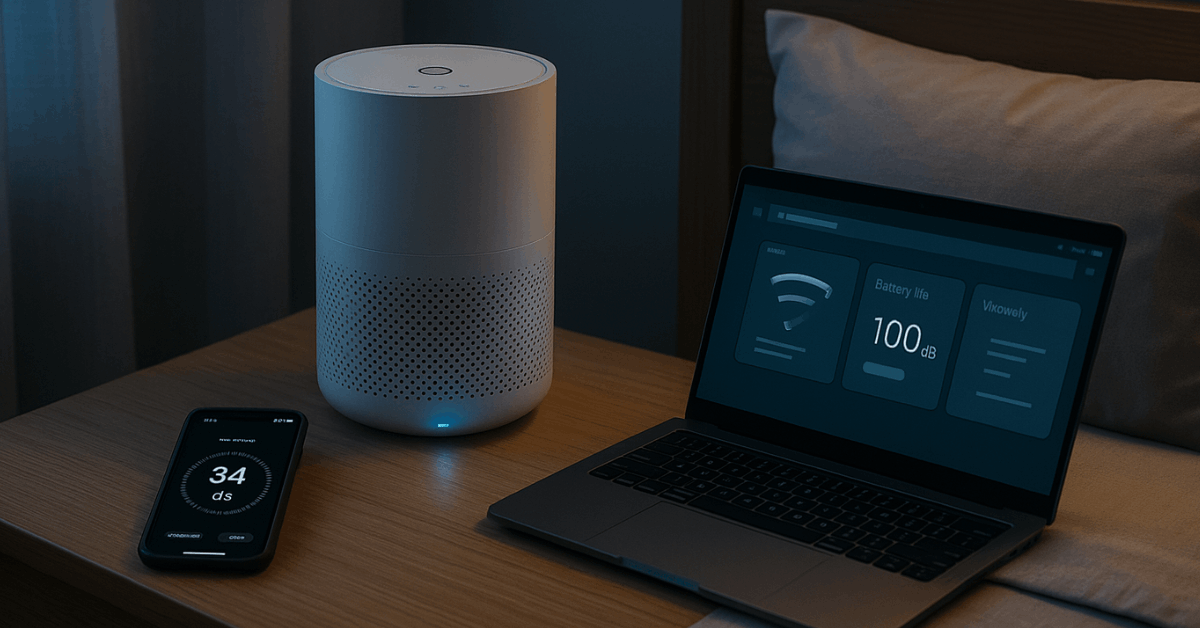
- Noise targets: Around 50 dB feels similar to the typical refrigerator hum and works for living spaces. Bedroom-friendly models often sit near 30–40 dB on low; example speed ladders include roughly 30, 41, 51, 62, and 70 dB as you step up through modes.
- Energy efficiency: Look for high-efficiency certifications used in your region and published wattage at each speed. Running a slightly larger unit on low often saves noise without a big energy penalty.
- Placement: Position the unit in the room where you spend the most time, keep intakes and outlets clear of curtains or walls, and avoid tight corners; smart placement can improve effectiveness noticeably.
- Speed strategy: Use high speed when away to clear spikes, then drop to low when nearby to keep noise down while maintaining gains.
Feature Checklist That Actually Helps
Unnecessary extras inflate the price without improving the air. Consequently, focus on additions that save money or effort.
- Auto mode and air-quality sensors: Adjust speed in real-time to match pollution levels, reducing energy consumption and extending filter life.
- Filter availability in-app or online: Quick links prevent model-number mistakes and reduce downtime.
- Wi-Fi, remote, and schedules: Useful if you travel or want nighttime quiet hours.
- Display dimming: Valuable for bedrooms to cut light pollution.
- Wheels or handles: Handy for moving a single unit between rooms.
Deal Tactics for Lower Prices
Sales rotate quickly across regions and platforms. As a result, use a few simple habits to land consistently low prices worldwide.
- Watch seasonal timing: Expect strong promos during major shopping events, new-model launches, and wildfire seasons.
- Bundle filters: Prioritize listings that include an extra HEPA and carbon set; this approach beats stand-alone discounts over a year.
- Use price-drop alerts: Track specific models and filter SKUs so you react instantly across multiple marketplaces.
- Check open-box and refurbished. Favor options with original warranty and free returns; replace filters on day one.
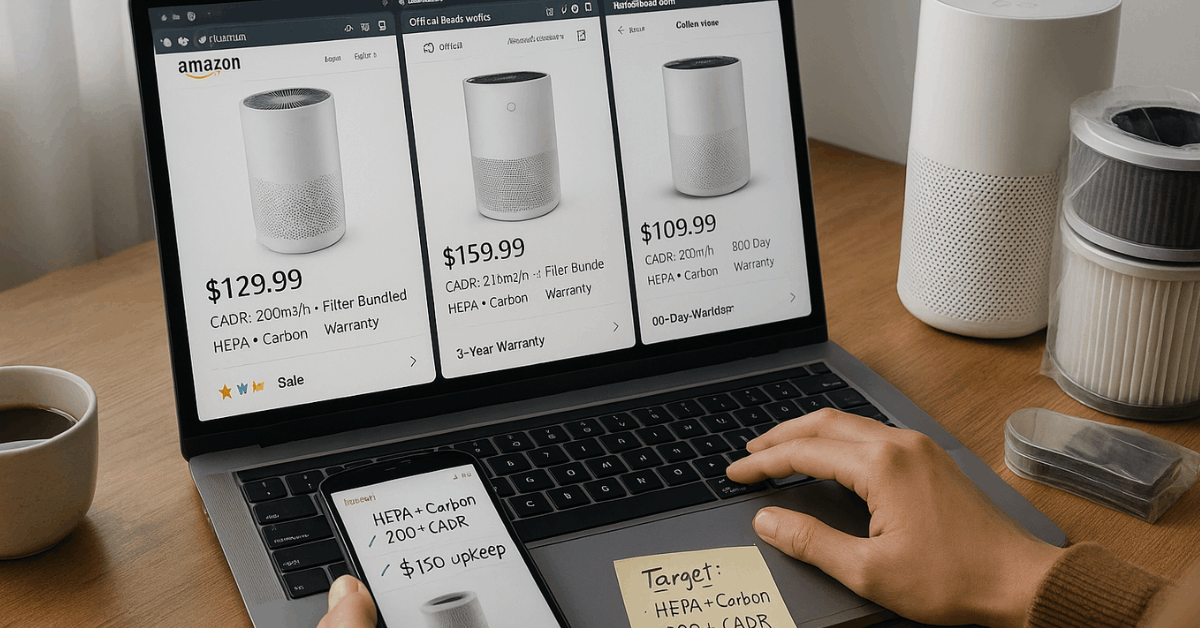
- Compare total cost. Add the first two years of filters and energy to the cart price; the lowest total wins, not the lowest unit price.
Safety and Red Flags
Some designs promise miracles but add risk or little benefit. Therefore, enforce a few hard lines.
- No ozone generators, full stop. Health risks outweigh any claims of odor removal.
- Skepticism for “kills everything” claims. UV and advanced oxidation need specific exposure and engineering to work; do not pay extra unless independent data supports real-world performance.
- Vague “HEPA-type” marketing. Demand clear filtration ratings and replaceable part numbers.
- No filters available regionally. Skip models without easy filter access where you live.
Quick Start After Delivery
Fast setup keeps momentum strong, and proper use protects your investment worldwide. Unbox, install the HEPA and carbon correctly, and note the filter model codes in your phone.
Place the unit in the bedroom or main living area, at least a few inches from walls and away from curtains. Run on high for an hour to knock down initial pollution, then hold low or auto mode continuously.
Set calendar reminders matching the expected filter schedule, and vacuum regularly to remove settled allergens.
Conclusion
Cheap becomes expensive when filtration is weak, filters are rare, or noise prevents 24/7 use.
Choose a true HEPA purifier sized to your room, add carbon if odors are a concern, verify filter costs and availability, and buy from sellers that support easy returns and genuine parts.
Follow that sequence across marketplaces and regions, and you will secure clean air at a truly low total cost.