Scoring cheap LED strips that actually perform takes quick, objective checks, not hype. You will use this guide to scan the specs that matter, choose reliable listings worldwide, and size power supplies correctly.
Clear targets for brightness, LED density, CRI, voltage, max run, and IP rating prevent dim, flickery, or short-lived results, and simple install tips help you finish cleanly on a budget.
How to Spot a Good Deal Fast
Paying less only helps if the strip performs as expected; therefore, scan these specs first so you avoid dim, flickery, or short-lived purchases.
- Brightness: Target at least 450 lumens per foot for task or general lighting, and less for accent runs. Sellers should list lumens; missing data is a warning sign.
- LED density: Prefer 36 LEDs/ft (≈120/m) for smooth, hotspot-free light. Lower density works for indirect coves where dots are hidden.
- Power draw: Quality strips deliver around 4 W/ft (≈15 W/m); unusually high brightness claims at very low wattage are not credible.
- Chip type:
2835: efficient and bright for white strips.
3528: efficient at lower output.
5050: larger package used for RGB/RGBW color. - Color quality: Choose CRI ≥ 90 for kitchens, retail shelving, photography, or anywhere color matters; TLCI also helps for video work.
- Voltage: 24 V supports longer runs and less voltage drop; 12 V suits small projects and vehicles.
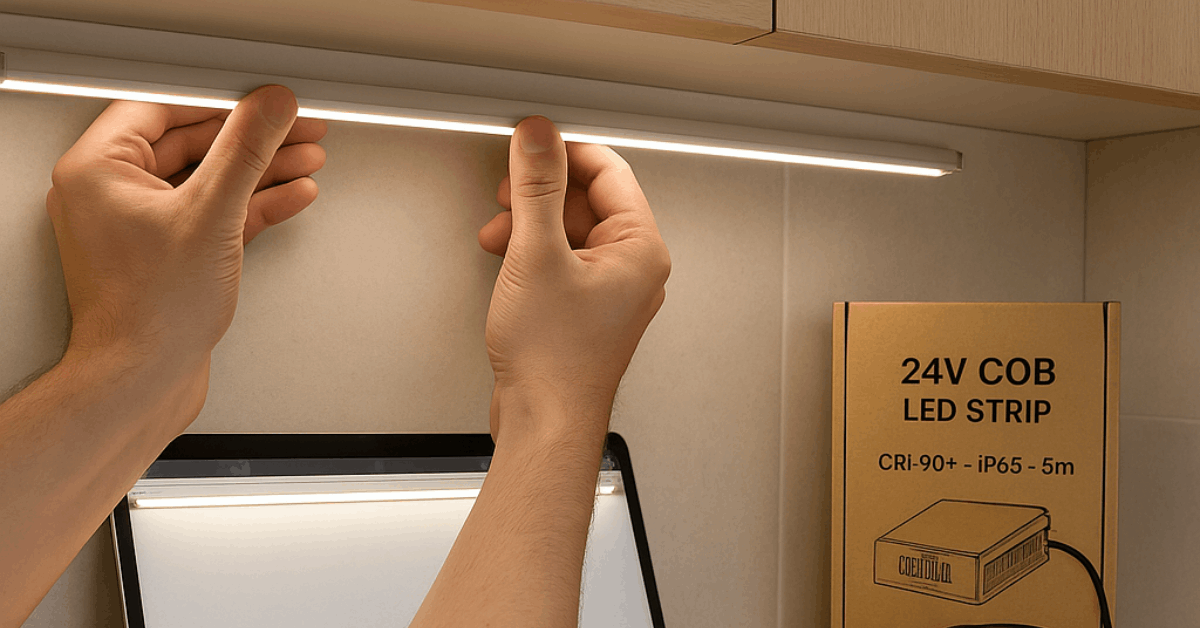
- Max run: Check the listed maximum length per feed; long runs need power injection, amplifiers, or multiple feeds to prevent dimming.
- IP rating: IP20–33 for dry interiors, IP65 for splash areas, IP67/68 for outdoor or submersible installations.
- Controls: Match strip type and controller exactly (single-color, tunable white, RGB, RGBW, or addressable “RGBIC”).
- Documentation: Favor listings that include cut-point spacing, adhesive type, and compatible connectors or channels.
Where to Buy Cheap LED Strips Worldwide
Sticker price is only part of the deal, which means shipping time, returns, and accessory availability matter just as much when you need a working setup.
| Source | Typical Price (per 5 m) | Best For | Advantages | Trade-offs |
| Global marketplaces (Amazon, AliExpress, Temu, eBay) | Low to very low | Budget kits, RGB/RGBIC sets, seasonal projects | Huge selection, frequent coupons, worldwide shipping | Variable quality, inflated spec claims, slower support on some platforms |
| Brand-direct budget lines | Mid | White strips, tunable white, COB strips | Better documentation, consistent bins, safer ratings | Higher price than no-name kits |
| Electrical wholesalers & lighting retailers | Mid | Longer runs, 24 V systems, commercial installs | Spec sheets, real lumen data, pro accessories | Requires account in some regions, fewer deep discounts |
| Local hardware stores | Mid | Quick replacements, short accent runs | Same-day pickup, easy returns | Limited variants, fewer high-CRI options |
| PC mod / automotive shops | Low–mid | Addressable ARGB, 12 V vehicle installs | Ready harnesses, compact controllers | Shorter reels, gaming aesthetics not ideal for homes |
| Premium brands (ALL LED, Saxby, Häfele, Waveform, similar) | Mid–high | High-CRI tasks, kitchens, retail displays | Color accuracy, warranties, matched drivers | Higher cost, fewer flash sales |
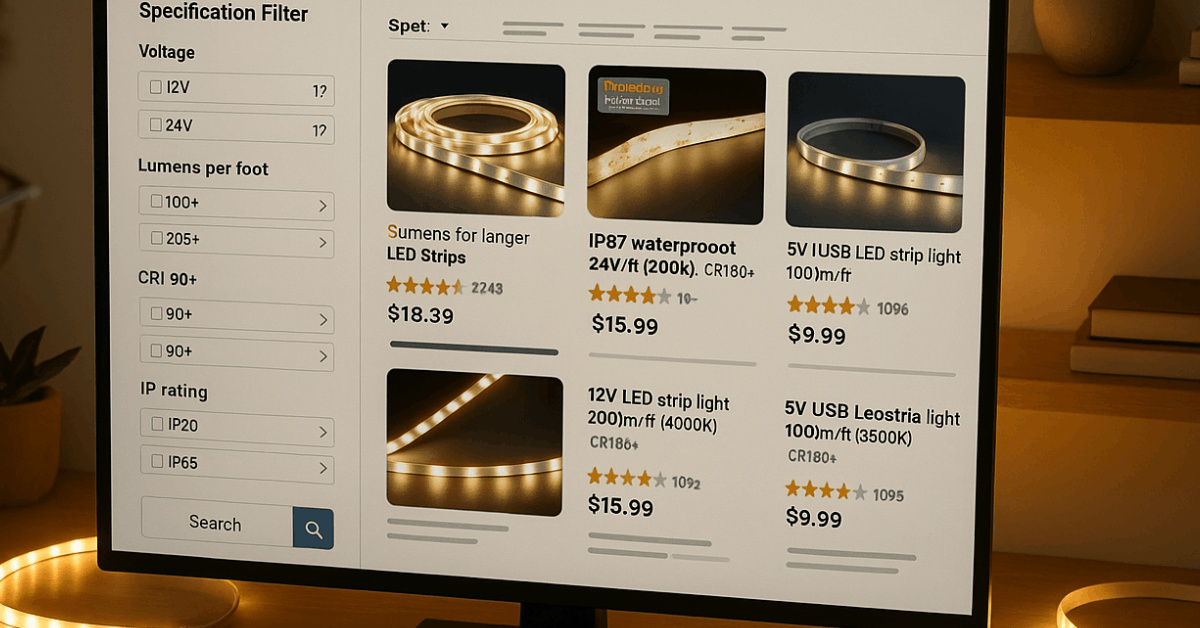
Filter marketplace searches using phrases that reflect real specs, not marketing claims, to surface better listings faster.
Safe Budget Picks: What to Search For
Cheap does not need to mean compromised; in turn, precise queries help you land the right listings.
- “24V COB LED strip 1200 lm/m CRI90 5m” for dot-free under-cabinet runs.
- “RGBW 24V 5m strip + controller” for color plus true white without muddy mixing.
- “Addressable RGBIC WS2812B kit 5m” for animations and color chasing.
- “IP65 24V 120LED/m outdoor strip” for patios and bathrooms.
- “Aluminum channel LED strip diffuser 2m” for tidy installs and smoother output.
Voltage and Power Supplies Simplified
Choosing the right driver prevents flicker and early failures; as a result, size the power supply with a small overhead to keep it cool and reliable.
- Match voltage: Use a 12 V supply for 12 V strips or a 24 V supply for 24 V strips.
- Calculate load: Multiply strip length by watts per foot (or meter) to get total watts.
- Add headroom: Divide by 0.80 to add 20% headroom.
- Select the next size up: Pick a supply equal to or above that number.
- Example: A 16.4 ft run at 4 W/ft draws 65.6 W. Minimum supply is 65.6 / 0.80 = 82 W. Choose a 96 W unit for margin and common availability.
Notes that save money: Plug-in adapters work for short runs, while larger projects benefit from hard-wired drivers and a junction box. TRIAC-dimmable drivers are needed if you want to use a wall dimmer on the AC side.
Avoiding Common Issues That Waste Money
Small mistakes cause dim strips or returns; consequently, run these checks before checkout and during installation.
- Wrong strip style: Pick single-color for functional white, tunable white for day-to-night ambiance, RGB/RGBW for color scenes, and addressable for animations.
- Voltage drop: Do long runs using power at both ends, feeds every max-run length, or amplifiers between sections.
- Flicker: Pair strips with compatible drivers and controllers; poor or overloaded supplies create visible flicker and eyestrain.
- Poor CRI: Use CRI 90+ for food prep, makeup areas, art, and product photos.
- Wrong dimmer: Combine LEDs only with LED-rated dimmers or low-voltage inline controllers.
- Cutting errors: Cut only at marked copper pads and seal ends on waterproof models to maintain the IP rating.
Installation Essentials on a Budget
A clean install helps cheap gear look premium; that way you extend lifespan and avoid rework.
Mounting methods:
- Adhesive backing for smooth, clean surfaces; add adhesion promoter for textured areas.
- Mounting clips for extra hold or non-stick surfaces.
- Aluminum channels for a finished look, light diffusion, and mild heatsinking.
- Connections: Use solderless clamp connectors, jumpers, and splitters for quick builds; solder joins provide the most reliable connections when you can do it safely.
- Accessories to consider: Pigtails, CPS adapters, extra wire for gaps, end caps, heat-shrink, silicone sleeves, and corner connectors.
Indoor vs Outdoor: Choose the Right IP Rating
Water and dust exposure determines longevity; hence, match the rating to the real environment.
- Dry interiors: IP20–33 for shelves, coves, desks, and TV bias lighting.
- Splash zones: IP65 for kitchens near sinks and bathrooms away from direct jets.
- Outdoors: IP67/68 for decks, pathways, gazebos, and shallow submersion areas.
- Vehicles: Weatherproof coatings help against vibration and moisture in engine bays or underbodies; confirm voltage for the electrical system.
Single-Color, Tunable, RGB, or Addressable
Lighting goals drive strip choice; as a result, match features to the outcome you want.
- Single-color white: Reliable, bright, simple dimming for cabinets, closets, and work benches.
- Tunable white (CCT): Adjusts between 2700K and 6500K to suit morning focus or evening relaxation.
- RGB or RGBW: Adds saturated color; RGBW includes a dedicated white channel for clean whites.
- Addressable (color chasing): Per-segment control for animations, gaming setups, events, and signage.
The Premium Brands
Buying the cheapest option is not always the most cost-effective over time; accordingly, consider reputable lines when accuracy and uptime are crucial.
- ALL LED: Broad voltage support and dimmable models that fit residential to light commercial jobs.
- Saxby: Cost-effective kits, remote-control options, and waterproof variants that suit bathrooms and covered patios.
- Häfele: High-CRI under-cabinet and display solutions designed for precise color and consistent output.
- Waveform-style high-CRI lines: Specialty white and film-grade products where color fidelity is non-negotiable.
Availability and naming vary worldwide, so check local distributors or authorized resellers for warranty and driver compatibility.
Quick FAQs for Bargain Hunters
Short answers help you decide quickly, which means fewer returns and smoother installs.
- Are LED strips legal worldwide? Yes, for homes and businesses. Vehicle use can face color restrictions, so check local rules.
- Do strips raise electricity bills? Consumption is low compared to incandescent and halogen bulbs, so bills often go down.
- Can you leave strips on overnight? Yes, if properly powered and ventilated, using quality supplies and avoiding covering the strip is recommended.
- Can strips be cut? Yes, at marked cut points; reseal waterproof models to maintain protection.
- Why did a strip stop after cutting? The cut crossed the wrong area, or the pads were damaged; recut the pads or rejoin carefully.
- Do you need a special dimmer? Use LED-rated dimmers or low-voltage controllers matched to the strip type.
- How long do strips last? Quality products typically last 30,000–50,000 hours, depending on the heat and drive current.
- Why do LEDs dim over time? Natural lumen depreciation and heat stress reduce output; good heatsinking and correct drivers slow this.
Conclusion
Set your target use, pick the strip style, and choose 24 V when runs are long. Confirm lumens, density, CRI, and wattage, then size a driver using the total watts ÷ 0.80 rule.
Compare listings worldwide on marketplaces, then balance documentation and support against price.
Add basic accessories, connectors, channels, and a compatible controller, so your cheap purchase installs cleanly and performs well.