
Gaming notebook listings change fast and sales pages mix clear deals with traps, so you need a direct path to value worldwide.
This guide shows where to buy cheap gaming laptops across brand stores, authorized retailers, certified refurb outlets, and timed sale events, which means you keep honest specs, valid warranties, and predictable returns.
Use the checks and timing tips to secure a proven configuration at a lower price without sacrificing performance.
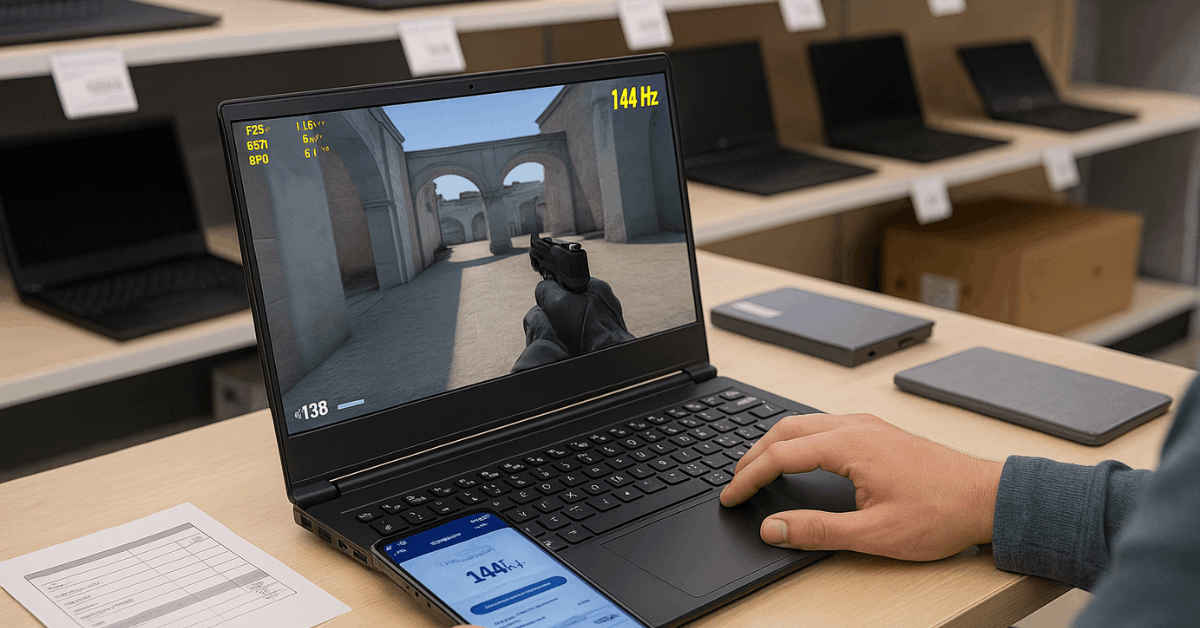
Where to Buy Cheap Gaming Notebooks Worldwide
Endless tabs and mixed messages waste time, therefore focus on channels that consistently honor specs, warranty, and returns.
- Brand-direct stores: Regional Acer, Asus, Lenovo, HP, Dell, and MSI sites frequently run seasonal promos, education pricing, and certified refurbs backed by manufacturer warranties.
- Authorized retailers and marketplaces: Reputable sellers publish full model codes, clear return windows, and proper VAT or tax invoices that support worldwide warranty claims.
- Certified refurbished outlets: Manufacturer or authorized refurb labels usually include fresh thermal materials or fans and publish at least a short warranty period.
- Open-box and clearance sections: Display units and returns often look near new, which means you keep most protections while paying substantially less.
- Regional flash-sale events: Back-to-school, 11.11, Black Friday, Boxing Day, Ramadan, and Diwali periods often combine stackable coupons and card rebates.
- Local retailers offering global shipping: Some chains ship internationally and honor dead-on-arrival exchanges, making them viable when domestic inventory runs thin.
- University or employer programs: Education and corporate portals regularly beat public pricing on mainstream gaming configurations.
- Community deal hubs: Active forums and Discord groups share specific model numbers, TGP values, and proven tweaks to reach intended performance.
Cross-border purchases can beat local pricing in certain months, which means you should price import duty, shipping speed, and charger compatibility before checkout.
Value Models Worth Targeting: 2025
Scrolling through hundreds of SKUs burns hours, which means you should start with lines that repeatedly deliver honest value.
Acer Nitro V 15 (various RTX 4050 SKUs)
You want a straightforward first gaming laptop that handles esports easily and many modern AAA titles at tuned settings. Expect competitive pricing, a 144Hz 1080p panel on common SKUs, and a useful port mix.
Trade-offs include louder fans under load, modest CPU headroom for creation tasks, and a 512GB SSD that fills quickly unless you add a second drive when available.
Lenovo LOQ 15 (RTX 4050 common)
You prefer a sturdy keyboard and balanced build without flashy lighting. LOQ units often pair RTX 4050 GPUs with sensible thermals and dependable 1080p results.
Expect a plainer chassis, slightly heavier weight, and basic color coverage on certain displays.
Asus TUF Gaming A14 (often RTX 4060)
Portability matters, yet performance still counts. The A14 brings a compact 14-inch chassis, bright high-refresh options, and dual M.2 slots on many configurations.
Speakers can feel thi,n and the styling stays conservative, though the size-to-speed ratio is strong.
Acer Predator Triton Neo 16 (RTX 4060 configurations)
Your budget can stretch for a brighter 16-inch display and a stronger CPU-GPU combo. Triton Neo variants often offer better color and higher sustained clocks, at the cost of louder cooling and a softer keyboard feel for certain users.
Acer Chromebook Plus 516 GE (cloud-first)
Local rendering is not always required for your use. The 516 GE targets cloud gaming with a high-refresh IPS panel, fast wireless, and a gaming-oriented keyboard.
Battery life can be average, and Android app flexibility varies depending on the workflow; however, streaming platforms run smoothly when connectivity remains stable.
Quick Comparison
Spec sheets vary a lot, and comparing takes time; as a result, this table gives you realistic expectations by GPU, screen, memory, and storage.
| Model line | Typical GPU | Screen class | Refresh rate | Usual RAM | Usual SSD | Notable trait |
| Acer Nitro V 15 | GeForce RTX 4050 | 15.6″ 1080p | 144Hz | 16GB | 512GB | Strong value, louder fans |
| Lenovo LOQ 15 | GeForce RTX 4050 | 15.6″ 1080p | 144Hz | 16GB | 512GB | Excellent keyboard |
| Asus TUF A14 | GeForce RTX 4060 | 14″ 1600p/1080p | 165Hz | 16GB | 1TB | Light, dual M.2 slots |
| Predator Triton Neo 16 | GeForce RTX 4060 | 16″ 1600p | 165Hz | 16GB | 1TB | Brighter, more vivid panel |
| Chromebook Plus 516 GE | Cloud or iGPU | 16″ 1600p | 120Hz | 8–16GB | 256–512GB | Cloud-first gameplay focus |
Component Priorities That Keep Costs Down
Many buyers chase headline features and miss bottlenecks, which means you should build around the GPU and align everything else to that choice.
GPU
Target GeForce RTX 4050 or RTX 4060 for reliable 1080p gaming at sensible settings. Newer RTX 50-series budget parts began appearing in 2025, and that shift often pushes 40-series models into better price brackets.
Verify total graphics power (TGP) where listed, since higher power limits commonly sustain stronger framerates.
Practical target:
- RTX 4050 or better for steady 1080p play across modern engines.
- Posted TGP or power limits should be checked carefully on product pages.
- Thin chassis paired with midrange GPUs can throttle under sustained loads.
CPU
A recent Intel Core i5 or AMD Ryzen 5 is sufficient for most games when matched to the right GPU. Core i7 or Ryzen 7 helps in simulation and strategy titles that hammer the processor, although that upgrade primarily benefits specialized libraries.
Practical target:
- Intel 13th or 14th Gen Core i5, or AMD Ryzen 5 7000 or 8000 series.
- Step up to Core i7 or Ryzen 7 if you stream, compile, or edit frequently.
Memory
Modern games and browsers consume memory quickly, in turn causing slowdowns when swap usage spikes. Dual-channel memory matters, so confirm two sticks rather than a single module.
Practical target:
- 16GB dual-channel as a smooth baseline for gaming and daily tasks.
- 32GB if you multitask heavy workloads while playing.
Storage
AAA titles frequently exceed 80GB and receive sizable patches, which means tiny drives become chores immediately. Many budget laptops include a second M.2 slot for painless expansion.
Practical target:
- 512GB as a bare minimum for the system drive.
- 1TB if you want several large games installed concurrently.
Display
A responsive 1080p panel at 120Hz or 144Hz feels much better than a slow higher-resolution screen on a modest GPU. Higher pixel counts look sharper and help creative work, yet they demand more horsepower for native-resolution gaming.
Practical target:
- 1080p at 120–144Hz for budget rigs built around RTX 4050.
- 1600p at 120–165Hz when paired with RTX 4060 or stronger.
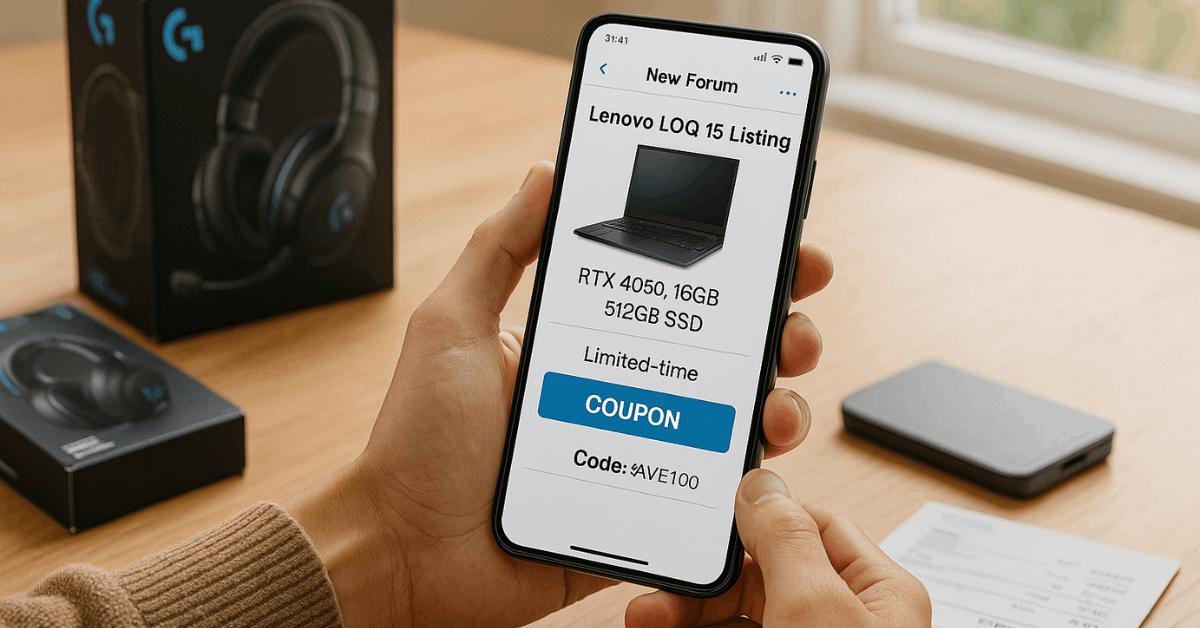
New, Refurbished, Open-Box, or Used
Sticker shock prompts many buyers to seek lower prices; as a result, consider alternatives that retain essential protections.
- New units: Full warranty and latest revisions, though larger discounts usually require patience or timed events.
- Manufacturer refurbished: Tested, cleaned, and often fitted with new thermal materials or fan assemblies, plus a direct warranty.
- Retailer open-box: Returns are inspected for function and often are nearly new, delivering notable savings without heavy wear.
- Private used: Cheapest option, yet highest risk, so insist on stress tests and drive health screenshots before paying.
Quick refurb checklist:
- Request SSD SMART health and approximate power-on hours.
- Inspect photos of vents, palm rests, and charger pins for wear.
- Confirm warranty coverage and region details before making a purchase.
Deal Timing and Tactics That Actually Work
Chasing every banner wastes effort, so it’s best to use repeatable moves that stack savings.
- Set price alerts on exact model numbers, including GPU, CPU, RAM, and SSD size, to avoid bait-and-switch listings.
- Stack loyalty points, card cashback, and limited coupons during single checkout sessions for maximum impact.
- Watch mid-cycle refreshes because new chips push prior SKUs into the sweet-spot range.
- Hit open-box sections after major holidays when return volumes spike.
- Request price matches over chat or phone when a verified rival lists an identical configuration lower.
- Consider cross-border buys when shipping plus duties still undercut domestic totals, and verify plug type and voltage.
Safety and Compatibility Checks Before You Pay
Hidden costs and mismatches cause most regrets; therefore, you should run this checklist every time.
- Return policy length and restocking fees are clearly stated on the actual product page.
- Warranty region and duration verified by serial in the brand’s portal.
- Keyboard layout and language confirmed by photos, not stock renders.
- Wireless standards are listed for stable multiplayer and controller pairing.
- Power adapter wattage and plug type matched to local sockets.
- Upgrade access validated for a second M.2 slot or user-replaceable RAM.
Budget Tiers and Realistic Expectations
Balanced expectations drive satisfaction, hence align spending to outcomes rather than slogans.
| Budget band (worldwide) | Target GPU | Target CPU | Memory | Storage | Display | Gaming expectation |
| Entry value | GeForce RTX 4050 | Recent Core i5 or Ryzen 5 | 16GB | 512GB | 1080p 120–144Hz | Medium to high settings at 1080p in many titles |
| Upper value | GeForce RTX 4060 | Core i5 or Ryzen 7 | 16–32GB | 1TB | 1080p or 1600p 144–165Hz | High settings in most modern games at 1080p |
| Stretch tier | GeForce RTX 4070 or 50-series mid | Core i7 or Ryzen 7 | 16–32GB | 1TB | 1600p 120–165Hz | High to very high at 1080p and many at 1600p |
How to Read Spec Sheets Without Getting Tripped Up
Spec pages sometimes hide key variables; consequently, verify these items before comparing prices. Exact GPU name and posted TGP or power limits because sustained performance depends heavily on those numbers.
Memory configuration, since dual 8GB sticks often outperform a single 16GB module in gaming workloads. Storage interface where NVMe PCIe drives load levels much faster than SATA alternatives.
Panel type and refresh rate, because IPS-class 120Hz or higher improves feel and visibility in fast games. USB-C DisplayPort or HDMI 2.1 outputs if you plan to drive high-refresh external monitors.
When a Gaming Chromebook Makes Sense
Local rendering is not always necessary for your setup, which means a cloud-first device can still be the right purchase.
Good use cases:
- You mainly stream titles and want a light laptop with a high-refresh screen and fast Wi-Fi.
- You travel frequently and value instant setup, long standby, and simple updates.
- You maintain a desktop at home and only need a portable client.
Weak use cases:
- You move through regions with unreliable connectivity that interrupts game sessions frequently.
- You mod games or run heavy local titles that require Windows and large storage.
- You depend on launchers or anti-cheat systems unsupported on ChromeOS.
Practical Configurations to Target
Decision fatigue slows you down. In turn, use these templates to filter listings worldwide.
- Balanced 15-inch starter: Core i5 or Ryzen 5, RTX 4050, 16GB dual-channel, 512GB SSD, 144Hz 1080p panel, and one spare M.2 slot.
- Portable 14-inch performer: Ryzen 7 or similar, RTX 4060, 16GB RAM, 1TB SSD, 1600p 165Hz panel, and dual M.2 bays when available.
- Creative-friendly 16-inch upgrade: Core i7 or Ryzen 7, RTX 4060 or better, 32GB RAM, 1TB SSD, brighter 1600p 165Hz display with decent color coverage.
Red Flags That Signal a Bad Deal
Sales pages sometimes hide mismatches that hurt later; therefore, bail out when these appear.
- 8GB RAM paired with a discrete GPU and no clear upgrade path in the manual.
- 256GB primary storage on a gaming model without a second M.2 slot listed.
- 60Hz display on a new gaming SKU unless the total price is unusually low.
- Vague GPU labels that omit model and power limits completely.
- Ultra-thin chassis paired with midrange GPUs that throttle during long sessions.
Conclusion
A budget gaming notebook should match your library, travel habits, and upgrade plan, not a marketing headline.
Anchor on the GPU, confirm dual-channel memory and a responsive display, and buy through sellers that back returns and warranty worldwide.
Do that consistently and you will secure a cheap gamer’s notebook that feels good today and stays useful longer than expected.