
Life can get noisy and demanding, making focused practice hard to sustain. You can meditate without tools, yet the right app speeds up learning and keeps you consistent worldwide.
Meditation Apps Help You Overcome Your Stress
Stress spikes can derail good habits, which means guided structure and accountability make practice easier to maintain worldwide.
- You get clear starting points, so sessions begin quickly without second-guessing technique or duration.
- Libraries cover multiple needs, focus, sleep, anxiety, and parenting, so you match practice to your current state rather than forcing a routine.
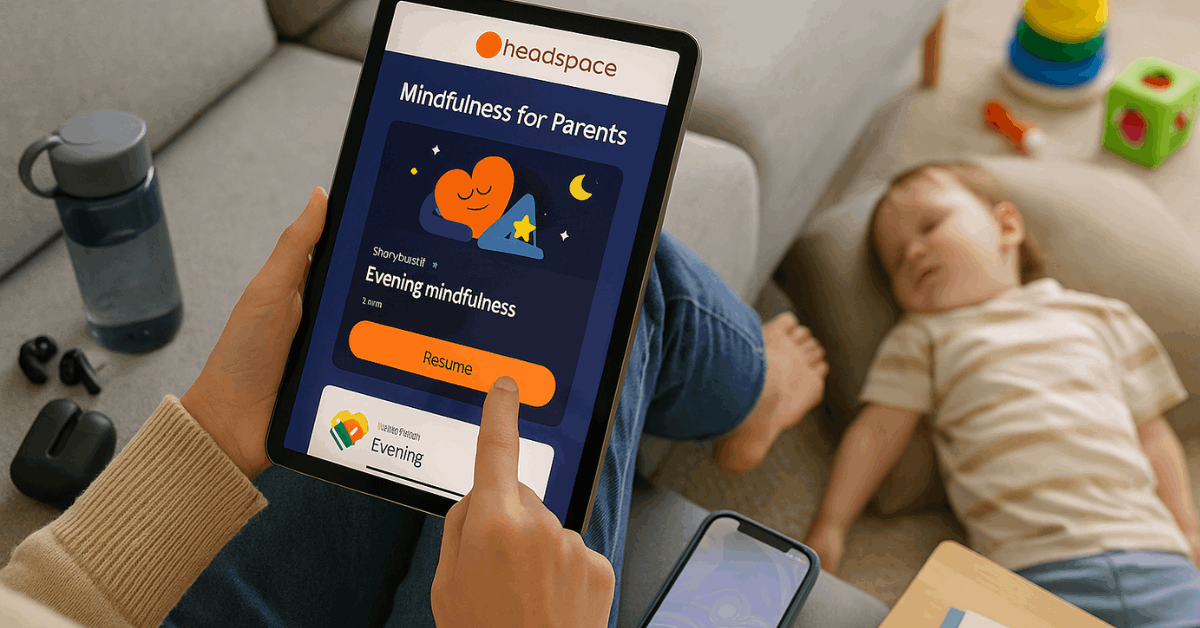
- Streaks, reminders, and playlists nudge consistency, which supports measurable gains in attention and emotion regulation over time.
- Short sessions fit tight schedules, so you can practice daily without rearranging your life.
- Multi-language options widen access worldwide, making it easier to include family members or coworkers with different preferences.
Quick Picks at a Glance
Too many choices create decision fatigue; therefore, the snapshot below narrows the field to three standouts that cover most needs.
| App | Best For | Platforms | Price (annual) | Highlights | Considerations |
| Insight Timer | Largest free library and beginners | iOS, Android | Free; $60 Membership | 275k+ tracks, 20k+ teachers, 50+ languages, offline downloads, live events across time zones | Most multi-day courses sit behind paywall; kids content sorting is uneven |
| Headspace | Meditation plus coaching and therapy options | iOS, Android | $70 individual; monthly available; student and family deals | 1,200+ meditations, sleepcasts, workouts, “Ebb” AI chat for in-the-moment support; accessibility features | Interface can feel busy; auto-renew requires cancellation steps; therapist access availability and pricing vary worldwide |
| Waking Up | Deep theory, structured courses, longer sessions | iOS, Android | $130; monthly available; scholarships offered | 2k+ tracks, 650+ hours, 28-day intro, long-form conversations on consciousness | English-only content; minimal kid content; sessions can be lengthy |
Top Picks: Details and Fit
Needs vary by experience level and support preferences; in turn, the breakdown below shows where each leading app excels and what to watch.
Insight Timer: Best Overall Value
A massive free catalog makes Insight Timer the easiest on-ramp when you are testing the waters or building a daily rhythm worldwide.
Standout features:
- Roughly ninety percent of a catalog exceeding 275,000 titles remains free, spanning guided and unguided meditations, music, talks, and yoga.
- Instructor diversity stands out, with more than 20,000 teachers and sessions in over 50 languages, which supports cultural and style fit.
- A consistent beginner’s course—“Learn How to Meditate in Seven Days”—gives you a simple weeklong plan.
- Live, donation-based events run around the clock across time zones; offline downloads and a sleep mode help with travel or low-signal situations.
- The “Made for You” control filters by duration, practice type, and outcomes like sleep or stress relief.
Keep in mind:
- Most structured, multi-week courses require the $60/year membership.
- Kid content exists, but age filters are limited, so parents may need to pre-curate playlists.
Privacy note:
- The stated policy indicates no sale of personal data and supports full account deletion upon request; always review the current terms inside the app.
Headspace: Best for Meditation Coupled with Care
Headspace blends approachable guidance with extras like movement, music, and sleepcasts, which means you can keep self-care in one place.
Standout features:
- More than 1,200 meditations plus themed programs such as “Mindfulness at Work,” parenting support, and multi-session sleep courses.
- An optional AI chat called Ebb helps you reflect, then routes you to relevant content when you feel overwhelmed or stuck.
- Accessibility options, including captions and haptic cues, enhance usability for diverse needs worldwide.
- Kids and family tracks live inside the main catalog, including bedtime material and age-aware lessons.
- As of June 2025, in-app access to licensed therapists is rolling out, subject to local availability and insurance.
Keep in mind:
- Navigation can feel busy, so bookmarking and searching become essential as your library grows.
- Auto-renew turns on by default; cancel right after purchase if you prefer manual renewal control.
Pricing:
- Typical individual pricing is $70/year with trials; monthly plans and student or family deals lower entry cost in many regions.
Waking Up: Best for a Master Class in Meditation
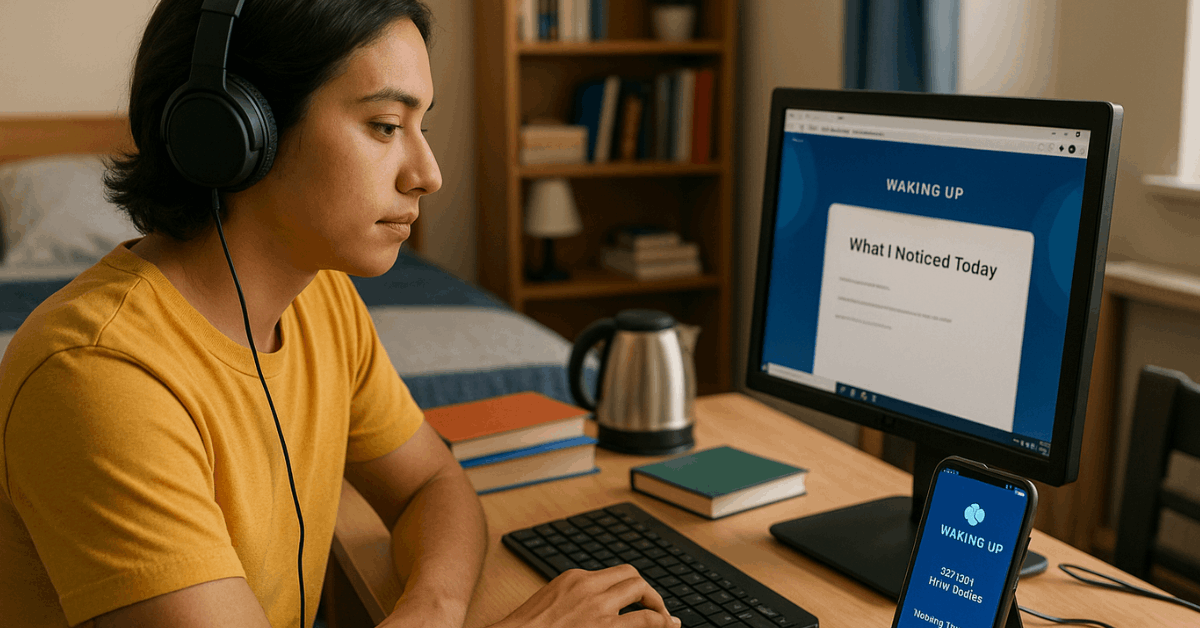
Serious learners who want the “why” behind practice will appreciate Waking Up’s structured curriculum and long-form lessons, which encourage deeper insight over time.
Standout features:
- A 28-day introduction teaches fundamentals before moving into advanced topics like self-inquiry and perception.
- More than 2,000 tracks totaling over 650 hours include long dialogues with scientists and philosophers.
- Courses target difficult themes such as conflict resolution, allowing you to apply the practice beyond the cushion.
Keep in mind:
- English is currently the primary language; kid offerings are limited, and accounts start at age sixteen.
- The annual plan is $130, though partial and full scholarships exist to widen access worldwide.
Free and Notable Alternatives
Not everyone needs a subscription immediately; as a result, the options below give you strong coverage at low or no cost.
- Calm: Polished guidance and rich sleep content, including music and nature tracks; annual plan unlocks the full library.
- The Mindfulness App: Short, timed sessions and a five-day intro make quick daily practice simple.
- Buddhify: More than 200 sessions labeled by activity and mood, useful when you want targeted help during the day.
- Ten Percent Happier: Practical, teacher-led mindfulness for skeptics who prefer plain language and pragmatic tools.
- Smiling Mind: Non-profit program that is free, age-segmented, and classroom-friendly; a good starter for teens and adults worldwide.
- Simple Habit: Thousands of short meditations designed for busy schedules; a lifetime option appears periodically.
- Pzizz: Psychoacoustic “dreamscapes” for sleep and naps when stress shows up as nighttime restlessness.
- Sattva: Vedic mantra and chant focus for those seeking a traditional approach supported by progress tracking.
How to Choose the Right App
Feature lists can blur together; a short checklist keeps selection objective and aligned with your goals.
- Content breadth: Look for guided and unguided options, including music, talks, and courses, as well as multiple session lengths ranging from five to thirty minutes.
- Ease of use: Favor clean navigation, fast search, and playlist tools; friction slows practice and undermines consistency.
- Trials and free tiers: Test the free experience thoroughly before paying, then subscribe only if the programs you need sit behind the paywall.
- Language and accessibility: Confirm languages, captions, and haptics to support your context worldwide.
- Sleep and stress tools: Prioritize bedtime stories, soundscapes, and SOS-style quick meditations if nighttime worry is your main trigger.
- Offline mode: Ensure downloads work reliably for commuting or travel without stable data.
- Kid and family content: Check age-appropriate tracks and parental controls when introducing practice at home.
- Privacy controls: Review data permissions, opt-out settings, and deletion options before building a long streak.
A Simple 7-Day Starter Plan
Starting small beats overreaching, therefore, the plan below builds momentum without overwhelming your schedule.
- Day 1: Pick one app and favorite a five-minute stress session; sit once in the morning and log how you felt afterward.
- Day 2: Repeat the same track to reduce decision load, then add a one-minute evening breath check-in.
- Day 3: Switch to a different five- to ten-minute session focused on tension release inthe shoulders and jaw.
- Day 4: Try a sleep track before bed; set your device to auto-lock when the session ends.
- Day 5: Join a live group or community room if available, which boosts accountability and normalizes ups and downs.
- Day 6: Create a two-item playlist—one short focus track for daytime and one short wind-down for night.
- Day 7: Review streaks, adjust notification timing, and commit to a realistic weekly target such as five short sessions.
Data and Privacy Tips
Mental health data deserves extra care; as a result, a few proactive settings keep your information tighter worldwide.
- Limit sharing: In apps that permit it, opt out of data sharing and marketing permissions inside account settings.
- Use deletion rights: Confirm that you can request account and data deletion; keep the support address or in-app form handy.
- Check integrations: Disable unnecessary connections to fitness or calendar apps until you see clear value.
- Mind auto-renew: Cancel right away if you prefer to decide later; your current term will continue without surprise charges.
- Review updates: Policies change; revisit privacy pages a few times a year, especially after app redesigns.
Conclusion
You can lower stress with simple, consistent meditation, and the right app removes friction so practice actually happens.
Start with Insight Timer for breadth at no cost, move to Headspace if you want coaching and therapy options under one roof, or choose Waking Up when deeper concepts appeal.
Keep it practical, keep sessions short at first, and protect your data while you build a habit that lasts worldwide.