Building a fitness equipment setup at home on a budget gets easier when you know where to shop and what to prioritize.
You will find smarter deals worldwide once you match your goals to the right equipment, choose the correct channels, and follow a simple quality checklist.
Fast Strategy: What to Buy New vs. Used
Sticker shock derails many home gym plans; therefore, split purchases deliberately to stretch your budget without sacrificing safety.
- Buy new for safety-critical items: Resistance bands, suspension trainers, racks with safety pins, barbells you plan to drop, and any load-bearing hardware should come new for predictable performance and intact warranties.
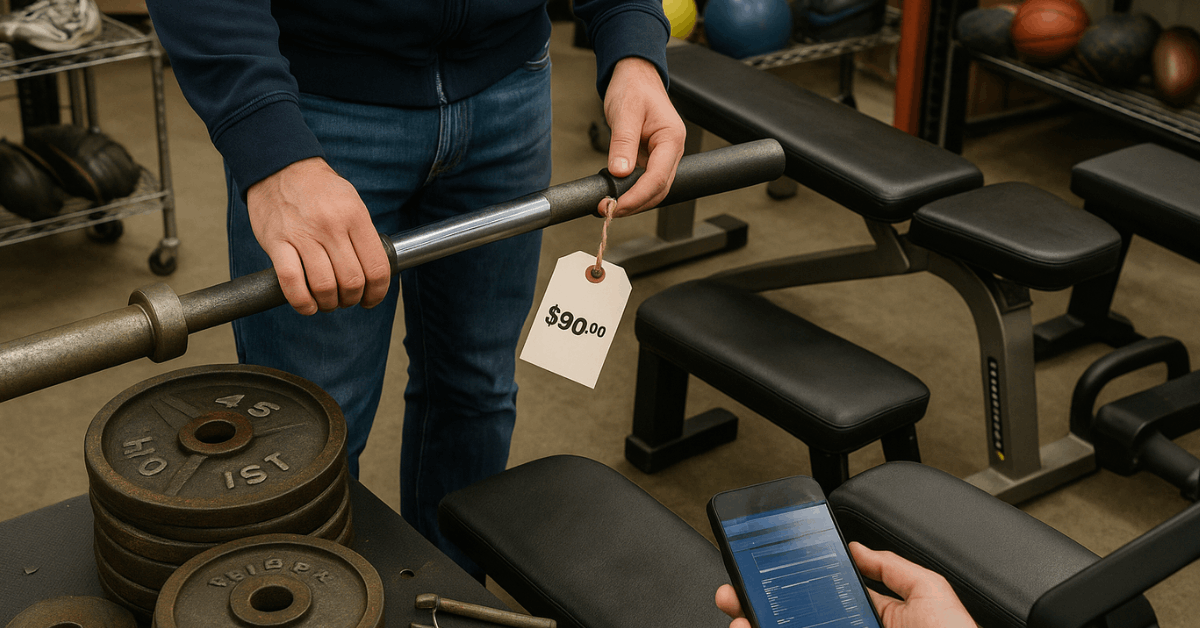
- Buy used durable metal pieces: Cast-iron plates, hex dumbbells, kettlebells, and simple benches usually survive years of use, which means secondhand options often deliver identical function at a fraction of the price.
- Buy new or refurbished for cardio: Treadmills, bikes, rowers, and ellipticals contain electronics and belts; in turn, factory-refurbished or new units reduce repair risk while keeping costs manageable.
- Buy open-box for accessories: Mats, jump ropes, foam rollers, and mobility tools frequently show up as returns or floor models, that way you pay less for items that rarely fail.
Best Places to Buy Cheap Fitness Equipment Online
Finding reliable discounts online saves time and money; therefore, start with large marketplaces for breadth, then use specialty shops for targeted deals.
- Amazon (worldwide availability varies): A broad selection across brands and price tiers, strong review volume, and frequent lightning deals help you compare products quickly.
- Walmart or a local big-box equivalent: Large retailers offer entry-level machines, bundle promotions, and convenient returns, making them a useful option for first-time buyers.
- Rogue Fitness (Outlet/Boneyard): Strength athletes can purchase scratch-and-dent bars, plates, and racks at reduced prices, offering premium hardware at a more affordable cost.
- Dick’s Sporting Goods or a regional sporting chain: Periodic sales on benches, dumbbells, and cardio machines offer value, in turn balancing price and in-store pickup convenience.
- eBay: New and used listings surface significant discounts; verify seller ratings, demand clear photos, and confirm return terms to control risk.
- Smart shopping moves: Set a firm budget, check verified reviews for durability and assembly, compare total prices including freight, confirm return and warranty policies, and measure your space before ordering to avoid surprises.
Offline Sources That Keep Costs Down
Local options can beat online prices when logistics favor you, which means you should scan nearby channels before paying for freight.
- Gym closures and upgrades: Facilities sell plates, bars, and commercial cardio during renovations or shutdowns, often at steep markdowns.
- Community classifieds and swap groups: Neighborhood marketplaces worldwide frequently list lightly used gear, so that you can inspect condition and negotiate face-to-face.
- Liquidation and surplus outlets: Overstock or discontinued models appear regularly, which means patient buyers secure new gear at used prices.
Cheap Does Not Mean Low Value
A clear understanding of categories helps you avoid gimmicks and focus on proven tools that deliver results worldwide.
- Free weights: Dumbbells, barbells, kettlebells, and plates drive strength and muscle gains efficiently. Adjustable dumbbells conserve space for apartments, while standard hex dumbbells resist abuse.
- Strength machines, including benches, power racks, Smith machines, and functional trainers, guide movement and add safety. Beginners benefit from fixed paths, while advanced users utilize racks for heavy squats, presses, and pulls.
- Cardio machines: Treadmills, exercise bikes, rowers, ellipticals, and stair climbers improve endurance and support weight loss programs. Air bikes and rowers scale intensity fast for interval work.
- Specialty tools: Suspension trainers, macebells, power clubs, plyo boxes, mobility bands, and BOSU-style balance tools add variety and address stability, coordination, and conditioning.
- Recovery tools, such as foam rollers, trigger balls, and massage guns, help relieve tightness and enable consistent training, resulting in fewer missed sessions.
Condition and Quality Checklist for Used or Discount Gear
Hidden flaws turn “cheap” into expensive repairs; therefore, use a consistent inspection routine before paying.
- Metal surfaces: Look for cracks, warping, deep rust, or loose welds. Light surface rust on plates cleans up easily, while structural damage does not.
- Moving parts: Spin bike cranks, rower chains, pulleys, and bearings should rotate smoothly without grinding or wobbling, which means less immediate maintenance.
- Belts and decks: Treadmill belts should track straight and feel uniform; ask for run hours or service logs when possible.
- Cables and pins: Frayed cables or bent selector pins indicate risk; replacements add cost quickly.
- Electronics: Screens should power on, buttons should register, and error codes should be absent. Confirm voltage compatibility in cross-border purchases.
- Completeness: Verify collars, bolts, safety bars, and manuals are included, so that setup happens safely on day one.
- Return and warranty: Clarify in writing to protect your budget if an issue appears after delivery.
Budget Starter Setup That Actually Works
Many buyers overspend on large machines too soon; therefore, assemble a compact kit that covers strength, cardio, and mobility first.
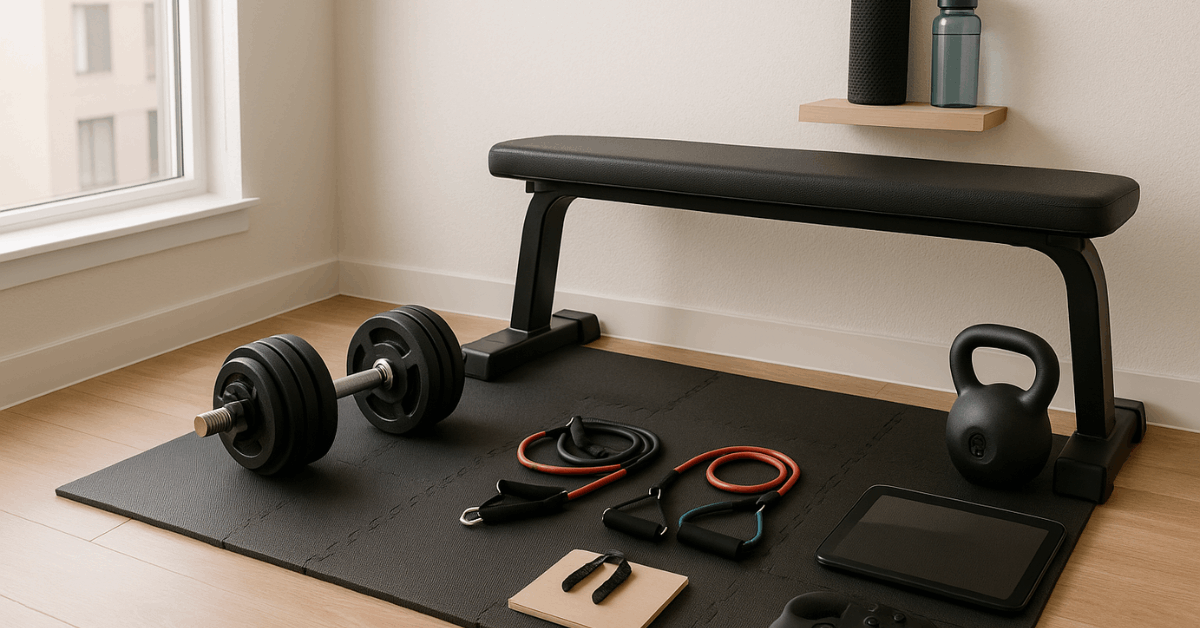
- Adjustable dumbbells cover a useful range for presses, rows, squats, and lunges.
- Flat or adjustable bench that locks securely and supports your bodyweight plus load.
- One kettlebell is a challenging but controllable weight for swings, cleans, and carries.
- Resistance bands set for warmups, assistance, and travel workouts.
- Skipping rope and floor mat for quick conditioning and joint-friendly surfaces.
- Foam roller or trigger ball to maintain tissue quality and recovery.
This kit fits most spaces, scales intensity easily, and pairs well with outdoor running or cycling if you are postponing a treadmill or bike purchase.
Safety and Setup Essentials You Should Not Skip
Injuries erase savings quickly; as a result, prioritize technique and safe habits while building your home gym.
- Form first: Proper technique protects joints and boosts results. Reputable exercise libraries and certified trainers provide clear cues for common lifts.
- Orientation and labeling: New machines often include printed instructions and diagrams; review them carefully before loading heavy weights.
- Pacing and progression: Controlled reps beat rushed volume, which means gradual load increases produce steady progress without setbacks.
- Hygiene and upkeep: Wipe handles and pads after sessions, tighten bolts monthly, and lubricate treadmill belts or cable pulleys according to the manual.
- Clear floor plan: Leave clearance around racks and cardio units, that way you avoid collisions and create consistent movement patterns.
Benefits That Justify the Investment
Budget gear still delivers strong returns when used consistently, which means your focus should remain on sustainable habits over flashy purchases.
- Strength and muscle: Free weights and machines target major muscle groups and support bone density, mobility, and long-term independence.
- Cardiovascular health: Treadmills, bikes, rowers, and ellipticals improve heart health, stamina, and weight management when scheduled regularly.
- Versatility and convenience: A small set of well-chosen tools enables full programs at home, reducing travel time and removing scheduling barriers.
- Motivation and consistency: User-friendly gear lowers friction, in turn keeping adherence high during busy weeks.
Quick Answers to Common Questions
Confusion around first purchases delays action; therefore, use these direct answers to move forward confidently.
- What equipment is best for beginners?
Treadmills, stationary bikes, and basic resistance machines provide controlled patterns, while adjustable dumbbells and a stable bench cover most strength needs at home. - What should you do first as a beginner?
Start with a general warmup and low-skill cardio, then add foundational strength moves. Always prioritize form over load to build confidence and avoid injury. - How do you learn to use machines correctly?
Follow the printed diagrams on the equipment, study reputable exercise guides, and ask a certified trainer to check your setup and range of motion. - What equipment is best for weight loss?
A mix of calorie-dense cardio, such as rowers, treadmills, or air bikes, plus full-body strength training, supports fat loss while preserving muscle mass.
Conclusion
Cheap fitness equipment does not equal poor results when you buy deliberately and maintain consistently.
You will save the most money worldwide by targeting durable categories on the secondhand market, choosing refurbished or open-box options for complex machines, and reserving new purchases for safety-critical items.
Apply the condition checklist, start with a compact starter kit, and upgrade only when your training demands it.