Buying a used car requires a simple, disciplined process that protects your money and time. You will set a realistic total ownership budget, target body styles and features that match daily use, and search trusted channels worldwide.
You will vet history and photos, test the car in daylight, secure an independent inspection, and negotiate from facts so the deal holds up after delivery. Preapproval and written trade-in offers anchor your numbers and keep financing honest.
Set Your Budget and Payment Plan
The sticker price tells only part of the story, which means you should define a total ownership cost that includes insurance, taxes, fuel, routine service, and a small repair buffer.

Car Cost Leveled in Your Income
Cap total monthly car costs at a level your income supports, then model scenarios for insurance and maintenance to ensure your plan withstands real-world bumps.
Get preapproved with a bank or credit union to lock in a competitive interest rate, which in turn gives you leverage against any dealer finance offer.
Trade-In
Treat a trade-in like cash and collect written quotes from online buyers and local dealers; that way, you use the highest offer during negotiations.
Pay cash only if funds are already available in an account that can issue a cashier’s check, since private sellers and many dealers prefer guaranteed funds.
Build a Target List: Body Style, Features, Powertrain
Guessing leads to wasted time; therefore, define how you actually drive and which capabilities you will use weekly.
List must-have features such as:
- advanced safety aids,
- smartphone mirroring,
- heated seats, or
- all-wheel drive
Keep a separate column for nice-to-haves. Choose body styles that fit your life today and twelve months out, for example, a compact hatch for city parking or a three-row SUV for a growing family.
Consider hybrids, plug-in hybrids, or EVs if charging access and electricity costs make sense where you live worldwide, and factor home charging hardware into the budget.
Choose Where to Buy Online
Too many sites can feel overwhelming at first, which means a quick side-by-side helps you focus your search time where it matters.
| Source type | Typical price | Pros | Cons | Best for |
| Major search aggregators | Low–mid | Huge inventory; strong filters; alerts | Mixed listing quality | Casting a wide net |
| Franchised dealer sites | Mid–high | Service records; financing; recourse | Higher prices; add-ons pushed | Newer used cars |
| Certified pre-owned programs | High | Factory warranty; multi-point checks | Limited selection; higher cost | Low-risk buyers |
| Private-party marketplaces | Low | Lowest prices; direct history | Cash preference; DIY paperwork | Experienced shoppers |
| Regional used-car chains | Mid | Many cars in one stop; returns in some markets | Pricing premium | Convenience buyers |
Search Smart: Filters, Distance, and Mileage Trade-offs
Great deals rarely sit next door, which means you may need to widen the radius and balance price against mileage and condition.
Start by selecting filters for price, year range, mileage ceiling, accident history, and key options. Then, save the search and enable alerts for new matches. Expand distance beyond your city when selection is thin, and include transport or one-way travel costs in the math so the total still works.
Prioritize condition over odometer alone because careful owners produce cleaner interiors, consistent service stamps, and longer component life.
Vet Each Listing: History Reports and Photo Clues
A single report won’t tell the whole story; therefore, combine official records with careful photo review and targeted questions.
Pull a history report using the VIN to check owners, title status, mileage consistency, and recorded accidents, which in turn flags immediate deal breakers. Scan listing photos for panel misalignment, mismatched paint shades, poorly placed badges, and overspray that often signals body repairs.
Ask for both keys and any service records because missing keys cost hundreds, and thin documentation increases risk; you should price this into your offer.
Contact the Seller and Set Up Test Drives
Polite, direct communication gets better responses, which means you confirm details quickly and avoid wasted trips. Verify availability, request the history report link, and inquire about the reason for the car’s sale. Then, schedule a daylight appointment to ensure flaws are visible.
Bring car seats, luggage, or mobility aids you use regularly, and plan a route that includes stop-and-go traffic, rough pavement, and highway speeds.
Prepare a short checklist covering visibility, seat comfort, infotainment functions, HVAC performance, brake feel, tire wear, warning lights, and unusual smells.
Get an Independent Inspection
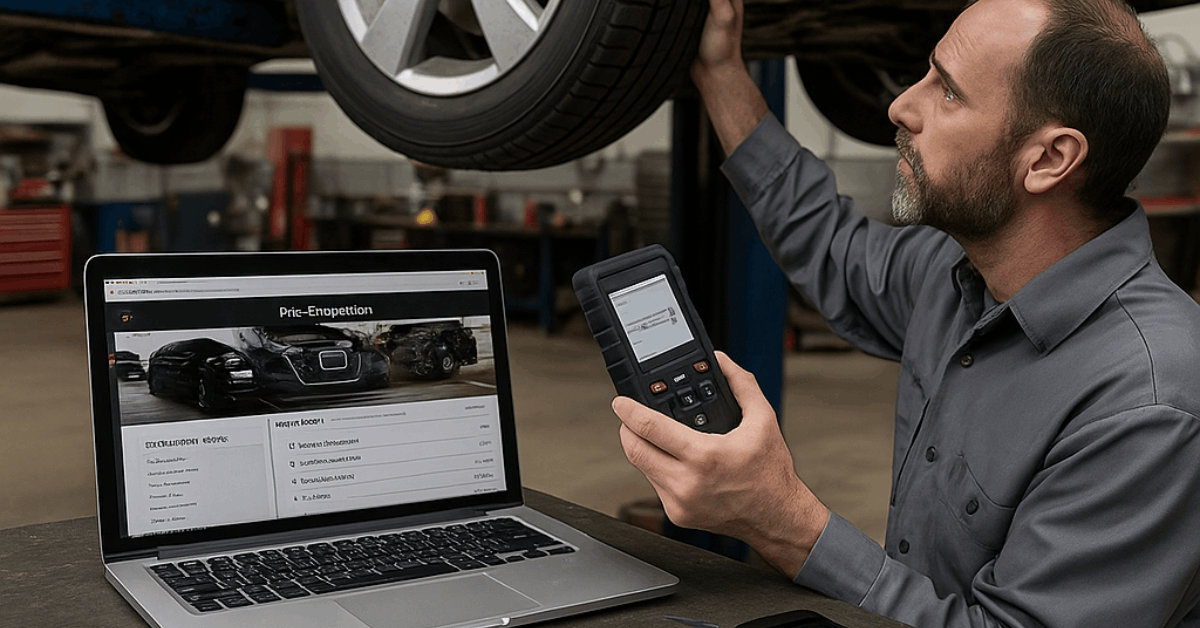
Hidden problems can erase any “cheap” price advantage; therefore, invest in a pre-purchase inspection before you commit.
Hire a trusted mechanic or mobile inspector to check coolant leaks, suspension bushings, brake thickness, charging system health, and underbody corrosion. Meet at the shop if the seller is hesitant to hand over keys, which in turn keeps the process secure and neutral for both sides.
Treat CPO coverage as a confidence boost, yet still review inspection paperwork because warranty scope varies across programs worldwide.
Compare Sellers, Warranties, and Add-ons
Seller type changes risk and value, which means you should match the channel to your comfort level and timeline.
Use CPO when you want newer vehicles, lower miles, and factory-backed coverage, understanding the price premium reflects lower risk. Choose private-party deals for the lowest purchase price and best insight into vehicle history, then budget extra time for payment and paperwork.
Decline high-margin extras you do not need, such as paint sealants or nitrogen tires, and shop third-party warranty quotes if extended coverage truly matters.
Negotiate, Finance, and Close the Deal
Open slightly below your researched target price and reference condition findings, then use written trade-in offers or transport quotes to support your math. Ask the dealer to beat your preapproval rate and total cost, which in turn can lower monthly payments without stretching the loan length unreasonably.
Read every contract page carefully and confirm the price, fees, taxes, VIN, mileage, and included items. Then, sign only after the figures match the agreed-upon deal.
Handle title transfer and registration according to local rules, add insurance before driving, and consider secure escrow for long-distance or cross-border transactions worldwide.
Where Cheap Cars Hide Online
Too many tabs can waste evenings; therefore, prioritize platforms that concentrate inventory and verify sellers.
- Start on large aggregators that combine dealer and private-party listings, then set alerts for price drops and newly listed vehicles matching your filters.
- Check franchised dealers for off-lease vehicles and model-specific CPO inventory, which in turn yields cleaner cars and easier financing.
- Scan private-party marketplaces in your region for older, higher-mileage bargains, and meet in safe, public locations when viewing cars.
- Review regional used-car chains for a broad selection and return windows where offered, understanding that convenience often carries a small premium.
Test-Drive Checklist You Can Reuse
Quick, consistent checks reveal issues fast, so you can compare cars fairly and avoid impulse buys.
- Confirm cold start behavior, idle smoothness, and exhaust smoke on first ignition.
- Check straight-line tracking, brake vibration, and transmission shifts during mixed driving.
- Test all electrics, including windows, mirrors, lights, wipers, audio, cameras, sensors, and charging ports on electrified models.
Inspect tires for even wear and recent date codes, and look under mats and in the spare-wheel well for moisture or rust.
Paperwork and Payment Essentials
Small administrative errors become big headaches later, which means tidy documents are part of the value equation.
- Match the VIN on the car, contract, and title; collect a signed bill of sale, copies of IDs, and any lien-release letters where applicable.
- Keep receipts for deposits and transport, store service records in one folder, and save digital copies in secure cloud storage for easy reference.
- Use cashier’s checks or verified bank transfers for larger transactions, and avoid carrying large amounts of cash to meetups.
After Purchase: Set Up, Learn, and Protect
Knowing the car speeds up ownership confidence, which in turn reduces early mistakes and surprise expenses.
Pair your phone, update infotainment software, set driver profiles, and program safety settings such as following distance alerts and lane guidance. Schedule baseline maintenance immediately for oil, filters, cabin air, brake fluid, and alignment, then set reminders based on the service booklet.
Read the digital owner’s manual, watch model-specific tutorials, and join owner forums for quick answers to common questions worldwide.
Conclusion
Finish strong by following the checklist that protects your money and time. Set a total ownership budget, secure preapproval, and use written trade-in offers to lock real numbers.
Search widely, verify history, inspect in daylight, and pay for an independent evaluation so surprises do not appear later.
Close only when contracts match your notes, transfer title correctly, add insurance, and schedule baseline maintenance, then enjoy reliable ownership backed by organized records and a plan you can sustain.